
ChatGPT Ads Adds Sponsored Agents and a Shopify App
OpenAI's Sept 16, 2026 ChatGPT Ads update adds Sponsored Agents, AI copy and imagery tools, plus Shopify and HubSpot integrations. What to prep next.
On this page
On September 16, 2026, OpenAI announced a set of updates to ChatGPT Ads: Sponsored Agents, AI assistance for creating and managing campaigns, opt-in AI text customization, and integrations with HubSpot and Shopify as the program's first CRM and ecommerce partners.
The Shopify piece is the one ecommerce teams should read twice. It is the moment conversational inventory stops being a curiosity a brand runs a pilot on and becomes an app inside the tool merchants already use to run their store.
What actually shipped
Four things, in order of how much they change your workflow:
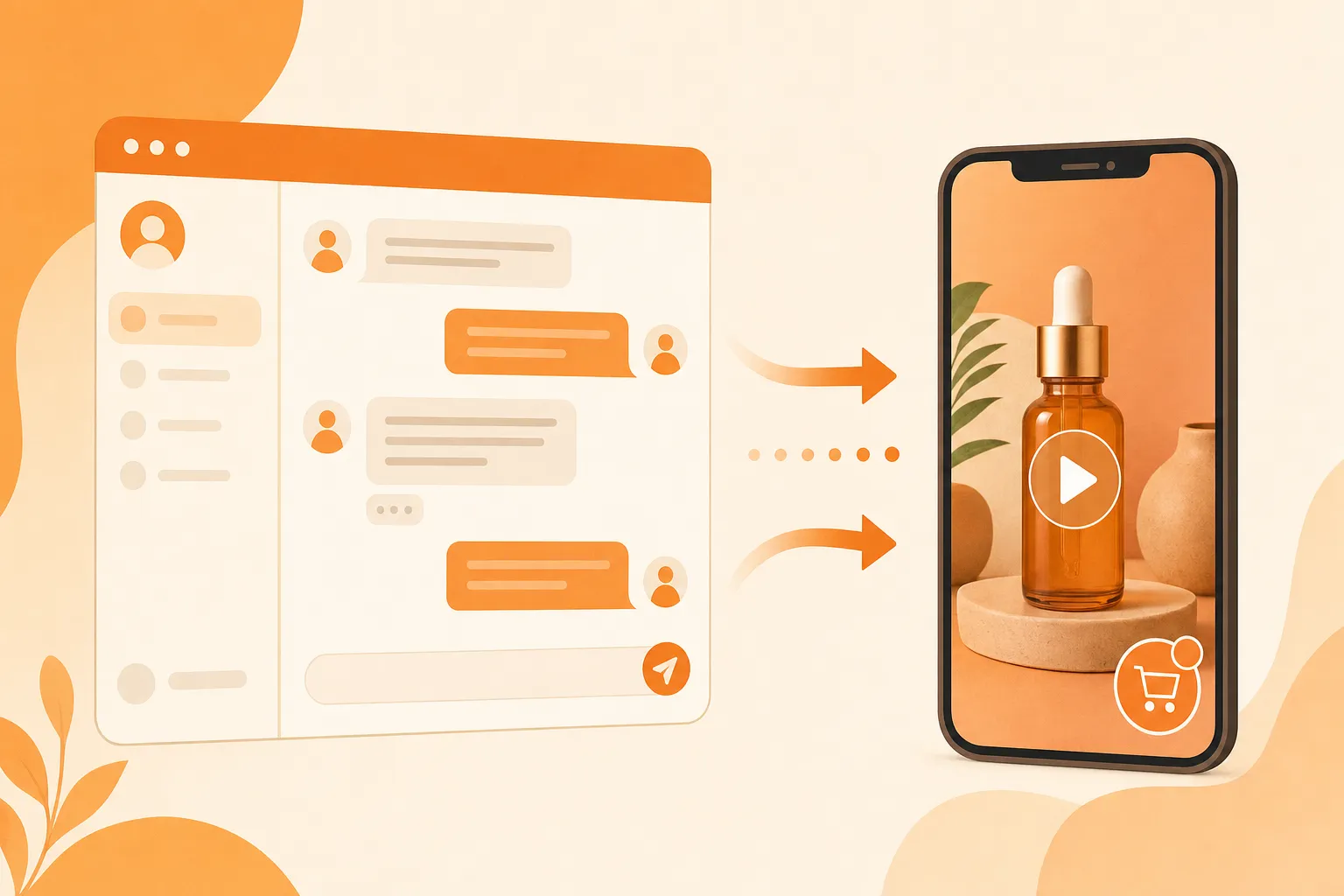
- Sponsored Agents. After clicking an ad in ChatGPT, a user can start a clearly labeled conversation with a business-sponsored agent — questions about fit, size, care, compatibility — and follow a link to the site when ready. Deliberately separate from the user's own ChatGPT conversation and from ChatGPT's independent answers. Testing now with select advertisers in the United States.
- Campaign management by prompt. Advertisers can create, update and analyze campaigns in natural language through the Ads Manager plugin in ChatGPT: "turn a website or brief into a campaign," read performance, get next-step recommendations.
- AI creative assistance inside Ads Manager. When drafting an ad, advertisers now get suggested copy and imagery based on their landing page and campaign objective, with review and edit before anything is added to a campaign.
- Integrations. HubSpot is the first CRM partner (connect a ChatGPT Ads account, create ads, track performance, follow up on leads inside HubSpot). Shopify is the first ecommerce partner: US-based merchants can install the ChatGPT Ads app from the Shopify App Store, and products are already connected through Shopify Catalog, so campaigns can run and be tracked immediately. The app goes international on September 23 in markets where ChatGPT Ads are available.
Why the Shopify app is the real story
Every ChatGPT Ads announcement this year has removed a piece of access friction — more countries, then self-serve, then third-party buying platforms. This one removes a piece of setup friction for the specific audience that has the most to feed into a conversational channel: merchants with a catalog.
Two details do the work. The catalog connection means the product feed work is already done for you — there is no separate data project. The Shopify App Store means the channel arrives where the merchant already is, not in a new dashboard that has to be justified internally.
That is a big deal for distribution, and it says nothing at all about creative. The new AI assistance drafts copy and imagery from your landing page. Suggested headlines are not a finished video ad, and a product feed is not a creative pipeline. In a channel that keeps getting easier to buy, the constraint that remains is the one you have to produce: what the person sees before they click, and whether the conversation with your Sponsored Agent starts with a question you can actually answer.
What Sponsored Agents change about the creative
Conversational inventory is pull, not push. Someone is mid-decision — comparing two products, asking whether a table fits their space — and the ad appears inside that moment rather than interrupting a scroll.
Sponsored Agents extend that logic one step further: the click is no longer a handoff to a landing page, it is the start of a conversation the advertiser has to be able to hold. Practically, that means:
- The hook has to state the product and the problem in the first seconds. There is no autoplay scroll-by doing the explaining for you, and the user's next action may be a question rather than a purchase.
- Product-first, one claim per variant. If you can't say in one sentence what a creative is testing, it isn't a variant, it's a brochure — and brochures don't survive a comparison moment.
- Vertical, short, captioned video. The format that already works in feed placements is the natural shape for a chat context, and it is the format a UGC-style pipeline produces by default.
- Answers your agent can stand behind. A conversational agent that promises something the ad doesn't is a compliance problem with a click attached. Write the claim before you generate the asset.
The prep list for this quarter
- Pick three to five SKUs with proven margin and existing purchase intent. Conversational inventory rewards products people already search for.
- Decide the claim per variant first. Five hooks against two formats is ten ads; write down what each one proves before you generate anything.
- Produce the variants cheaply. Ten ads at agency rates is a quarter's budget; ten ads from a URL-to-ad pipeline is an afternoon.
- Keep creative naming disciplined. If your channels are increasingly bought through other platforms' dashboards, the only reliable join key between a conversion and a hook is the variant ID you put on the asset and carry into the ad name.
- Check your rights. If creative is generated with an AI tool, confirm the plan includes full commercial rights before it runs as paid media.
What it costs to be ready
This is the part we can talk about with our own numbers. Prizmad turns a product URL into a finished UGC-style ad — script, hooks and offer copy written, one of 50+ avatars lip-synced to an AI voiceover, captions and music composited — in about five minutes. Token math is flat and published: ≈1,000 tokens per finished ad, on plans of $39/mo for 3,000 tokens (≈3 ads), $99/mo for 8,000 (≈8), and $249/mo for 35,000 (≈35), with full commercial rights included.
The ten-variant matrix above is roughly one month on Starter at about $12 per ad — budgeted before you click generate, and independent of whether the Sponsored Agents pilot has opened to you yet.
The honest caveats
- Sponsored Agents are a US test with select advertisers — no published date for wider access.
- The Shopify app is US-only today; international availability starts September 23 and only in markets where ChatGPT Ads already operate.
- AI text customization is opt-in, and it adapts your existing headlines and descriptions to the conversation and translates copy automatically. If you enable it, treat brand voice and translated claims as things to review, not things to trust.
- Suggested copy and imagery are advertiser-reviewed drafts, not approved assets. The review step is the control; skipping it is how an off-brand line ends up in a live campaign.
- No integration makes a weak offer work. Buy-side plumbing decides how easy it is to spend; the creative and the offer decide whether the spend returns.
The direction of travel is consistent: conversational inventory is becoming a normal line item inside normal commerce tools, and the feed connection is now somebody else's problem. What stays yours is the creative that earns the click and the conversation that follows it — which is exactly the part that has to be produced, in volume, on a schedule.
Start on the creative side: turn a product URL into your first ad in about five minutes, or read what AI video actually costs before you budget a test matrix.
Related reading: the Amazon DSP integration that opened the buy side, the $1B run rate and self-serve launch, and how to turn a Shopify catalog into video ads.