
Shopify Product Video Ads — The 2026 Playbook for DTC Brands
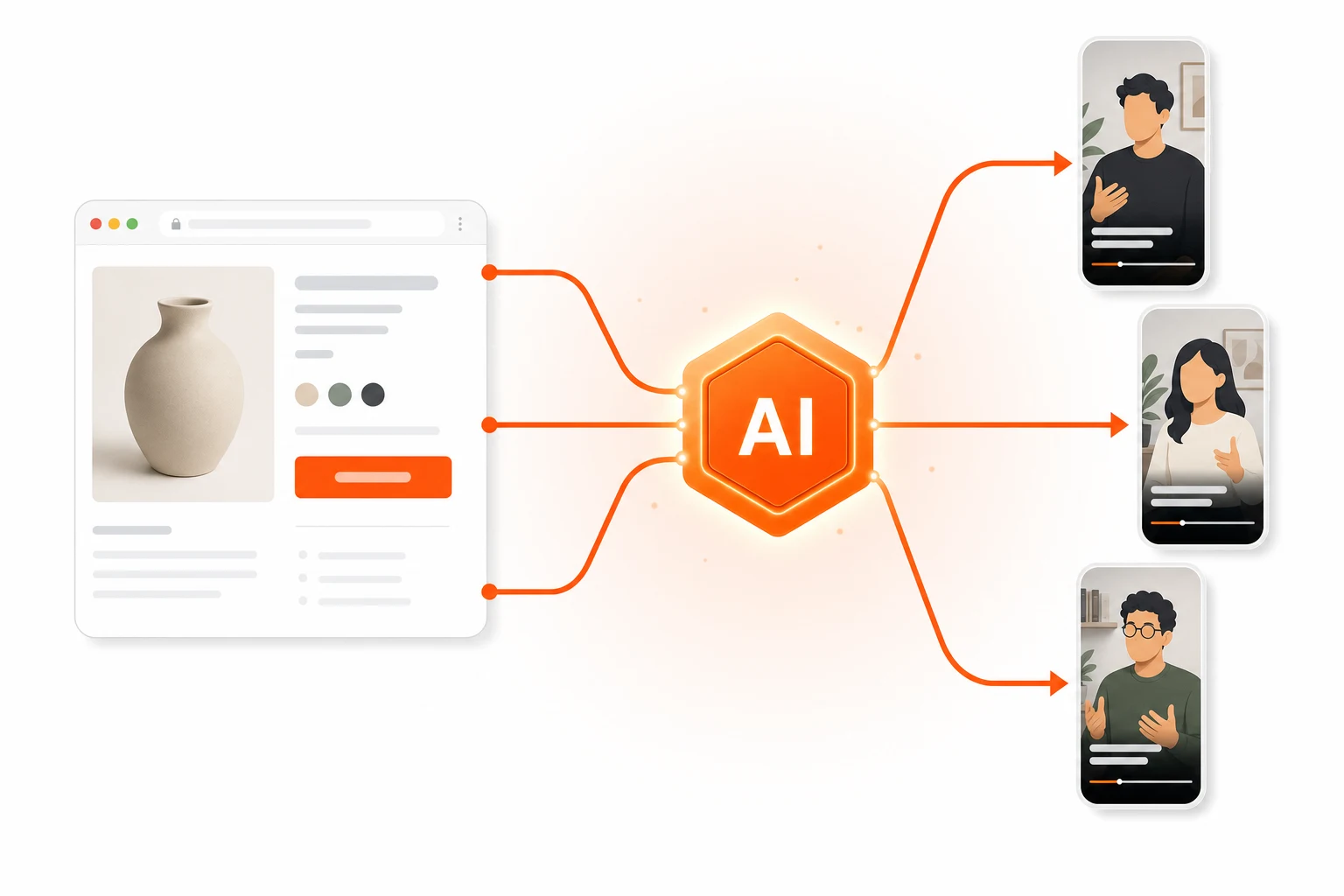
Turn any Shopify product URL into a 9:16 video ad in five minutes. Per-niche playbooks, ad-format specs, and the cost math for replacing UGC creators with AI.
On this page
Most Shopify owners hit the same wall: organic posts plateau, paid ads need video, and a single piece of UGC content from a real creator costs $500–$2,000 and takes 7–14 days to ship — pricing tracked publicly by UGC marketplaces like Insense and Billo. By the time the video lands, the product page has changed, the competitor is already running the same hook, and you have one creative — not a test matrix. Industry benchmarks from Wyzowl's State of Video Marketing show video is now the dominant creative format for ecommerce ads across every category.
This playbook walks through the 2026 alternative: feeding a Shopify product URL into an AI ad pipeline, getting a TikTok-/Reels-/Meta-ready 9:16 video back in five minutes, and running it through three to five hook/format variations before the end of the day. It covers the formats, the niche-specific creative patterns, the ad-policy details that trip people up, and the real cost breakdown — not the marketing one.
When AI video ads beat live UGC (and when they don't)
AI works for: product-led DTC brands with a clear visual SKU, fast-moving categories that need weekly creative refresh (apparel, supplements, skincare, home goods), accounts running 5+ concurrent ad sets, and any campaign that needs to test more than two hooks. The economics flip the moment you need ≥3 creative variations per week.
Live UGC still wins for: founder-led storytelling, customer testimonials with named individuals, regulated categories where on-camera disclosures matter (financial services, prescription), and trust-led launches where authenticity is the product. Don't replace those with AI — augment them.
The decision tree is roughly: is the creative about the product, or about a person? Product-led → AI. Person-led → human UGC.
Anatomy of a Shopify product video ad
A converting 15–30s vertical ad has five pieces. Each one maps to a specific tool in the Prizmad pipeline.
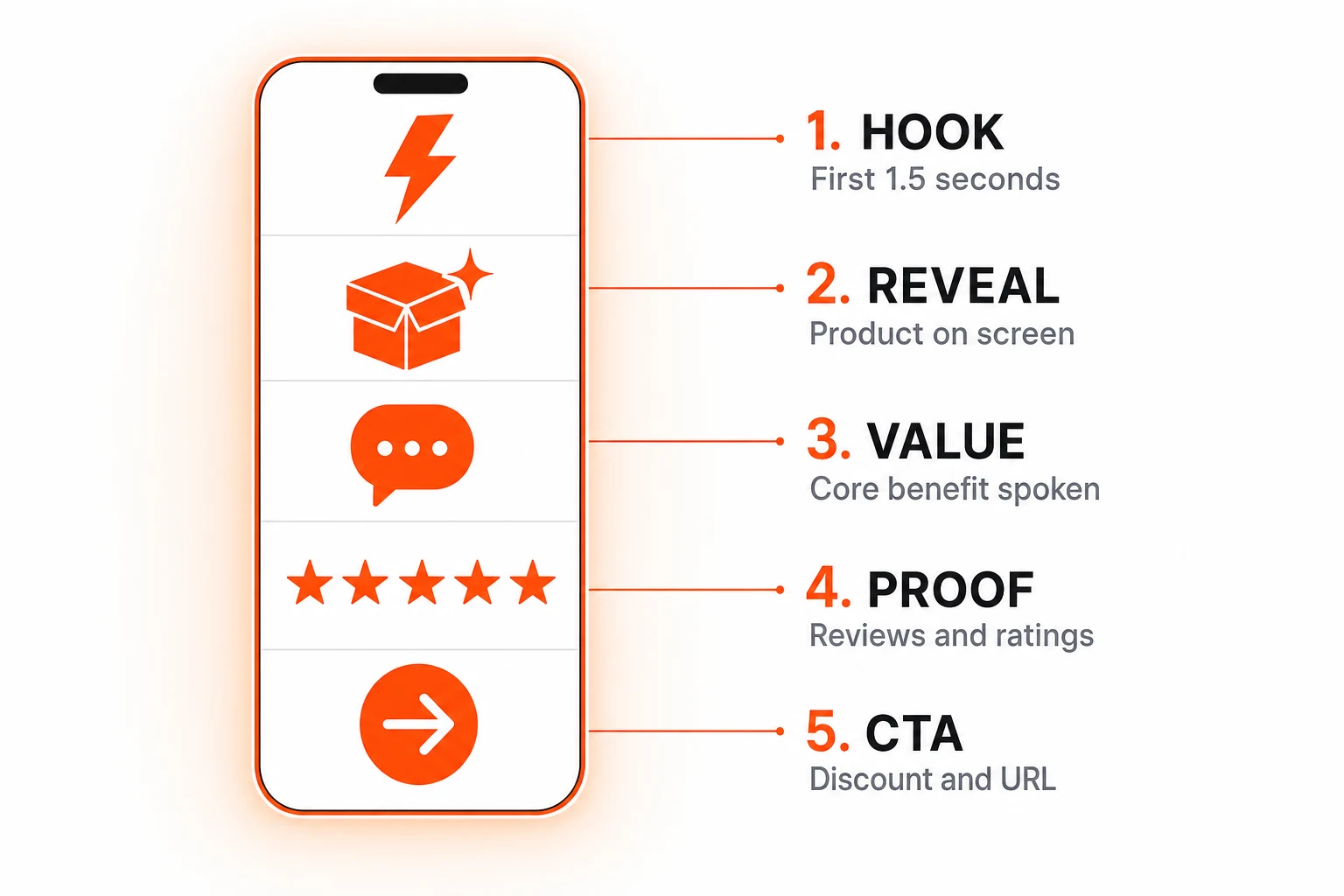
- The hook — first 1.5 seconds. Pattern-interrupt visual + spoken claim. Generated via the hook step using avatar + a tight 8–12 word script.
- Product reveal — seconds 2–6. The product, isolated, in motion, with a price point or social proof overlay. Built from the product images on the Shopify page using Image Generation and stitched in Seedance 2.0.
- Value carrier — seconds 6–15. Avatar speaks the core benefit, voiceover with subtitles. Driven by AI Avatar.
- Social proof beat — seconds 15–22. Star ratings, review quotes, customer count, "as seen in" — pulled from the Shopify reviews block.
- CTA — last 3–5 seconds. Clear price, discount code, scarcity, or seasonal hook + product URL.
The pipeline handles all five in one render. The user only edits the hook line if the auto-generated copy misses the brand voice.
Per-niche playbooks
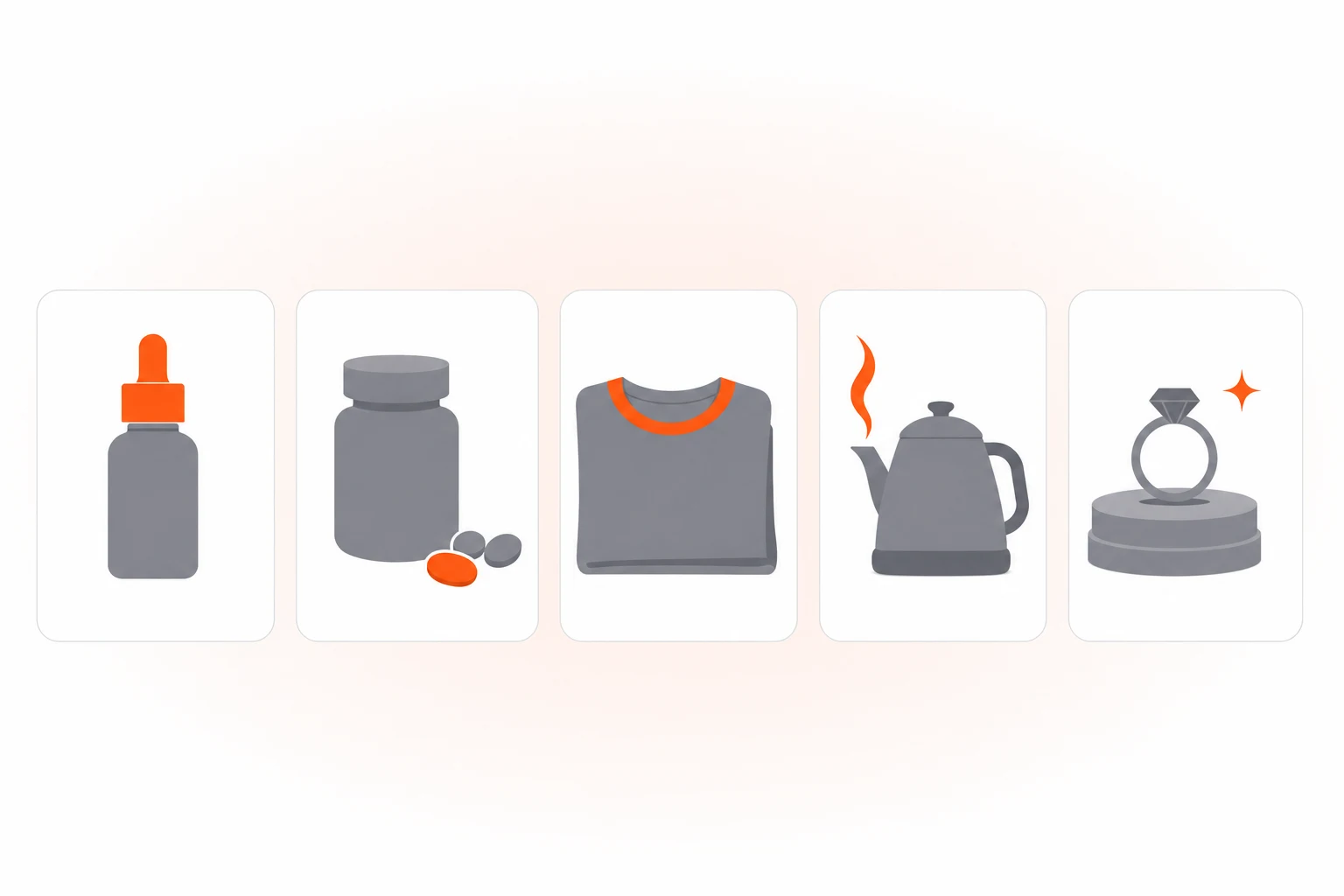
The same pipeline produces different ads for different niches because the template and the hook pattern change. Below are five niche playbooks that consistently outperform generic templates.
Skincare and beauty
Hook pattern: problem-first ("Why your skin still looks tired by 3pm"). Avatar tone: calm, knowledgeable, female-skewed but mixed. Product reveal: macro close-up + texture shot. Social proof: dermatologist mention, ingredient callouts (niacinamide, retinol, peptides), before/after if compliant. Avoid medical claims — Meta and TikTok ad policies are strict in this category.
Best Prizmad tools: AI Avatar for the talking head, Image Generation for ingredient close-ups, Background Music prompt: "soft acoustic, warm, female-coded".
Supplements and wellness
Hook pattern: outcome-first ("I tried this for 30 days and my afternoon energy crashes are gone"). Avatar tone: peer-to-peer, casual. Product reveal: bottle in hand + pill/scoop close-up. Compliance is the hard part — never claim treatment, prevention, or diagnosis. Stick to "supports", "may help with", "many customers report".
Tools: avatar with informal voice, Image Generation for "before lifestyle" mood shots, Seedance 2.0 for the pour/scoop B-roll motion.
Apparel and accessories
Hook pattern: identity-first ("If you're the kind of person who…"). Avatar tone: brand-voice-matched, often skipped entirely in favor of full visual storytelling. Product reveal: outfit on model + detail shots + fabric texture. Social proof: customer photos in lifestyle settings, UGC review quotes.
Apparel often performs better as voiceover-only with a static avatar in the corner or no avatar at all. Use Seedance 2.0 reference mode with the brand's lookbook imagery.
Home goods and decor
Hook pattern: transformation ("Renters: this 12-second install changed my entire kitchen"). Avatar tone: friendly homeowner, peer creator. Product reveal: before/after install, hands-on demo. Social proof: "X homes installed", DIY-friendly framing.
Hook should show the result in the first 1.5 seconds — viewers scroll fast in this category. Use Kling Motion Control 3 when you need a real installation video transformed into an ad with a different orientation or framing.
Supplements (subscription) and DTC consumables
Hook pattern: economic ("$2 a day vs $9 a day at the pharmacy"). Avatar speaks the math. Product reveal: subscription box opening, monthly delivery. Social proof: total subscriber count, retention rate.
These ads convert hardest on price. Make sure the discount code or first-month-free is on-screen for at least 4 seconds of the 30s creative.
Ad format spec sheet
Each platform has its own constraints. The pipeline outputs to all four targets from the same source.
| Format | Aspect | Duration | Max file size | Where it runs |
|---|---|---|---|---|
| TikTok Spark Ads | 9:16 | 9–60s (15–30 optimal) | 500 MB | TikTok For You feed |
| Meta Reels Ads | 9:16 | 1–90s (15s optimal) | 500 MB | Instagram + Facebook Reels |
| YouTube Shorts Ads | 9:16 | 1–60s | 256 GB | YouTube Shorts feed |
| Pinterest Idea Pins / Promoted | 9:16 or 1:1 | 5–60s | 2 GB | Pinterest home + search |
Authoritative spec pages, updated by each platform: TikTok for Business, Meta Business Help, YouTube Creators, and Pinterest Business.
Subtitles are essential — the majority of mobile feed traffic plays without sound on first view, a pattern repeatedly confirmed in Meta's own creative best-practices guidance. Prizmad burns subtitles into the rendered mp4 by default, so you do not need to add them separately in Ads Manager.
Compliance — the part that gets accounts disabled
Three traps to avoid:
- AI disclosure. TikTok's community guidelines and Meta's transparency policies both require labeling AI-generated content that depicts realistic-looking people in realistic-looking scenarios. The label is a creative setting, not a metadata flag. Apply it.
- Avatar likeness. Do not generate avatars that look like real, identifiable public figures, competitors' founders, or your customers. This is both a platform-policy issue and a right-of-publicity issue in the US/EU — the IAPP tracks the evolving legal landscape.
- Health and money claims. Standard Meta/TikTok/Google ad policy — does not change because the video is AI-made. For skincare and supplement categories specifically, the US FTC endorsement guides cover the line between "may help with" and "treats". Run scripts through the same legal review you would for a human-shot ad.
Cost math: AI pipeline vs UGC creator vs studio
Real numbers for a one-month creative test cycle (4 hook variations × 2 product angles = 8 creatives).
| Channel | Cost per creative | Turnaround | 8-creative test cost |
|---|---|---|---|
| UGC creator (mid-tier) | $400–$800 | 7–14 days | $3,200–$6,400 |
| In-house studio shoot | $1,500–$5,000 | 2–4 weeks | $12k–$40k (one batch) |
| Agency-managed UGC | $1,000–$2,500 | 4–6 weeks | $8k–$20k |
| AI pipeline (Prizmad) | ≈$7–13 per finished ad | under 10 min | ≈$57–104, same day |
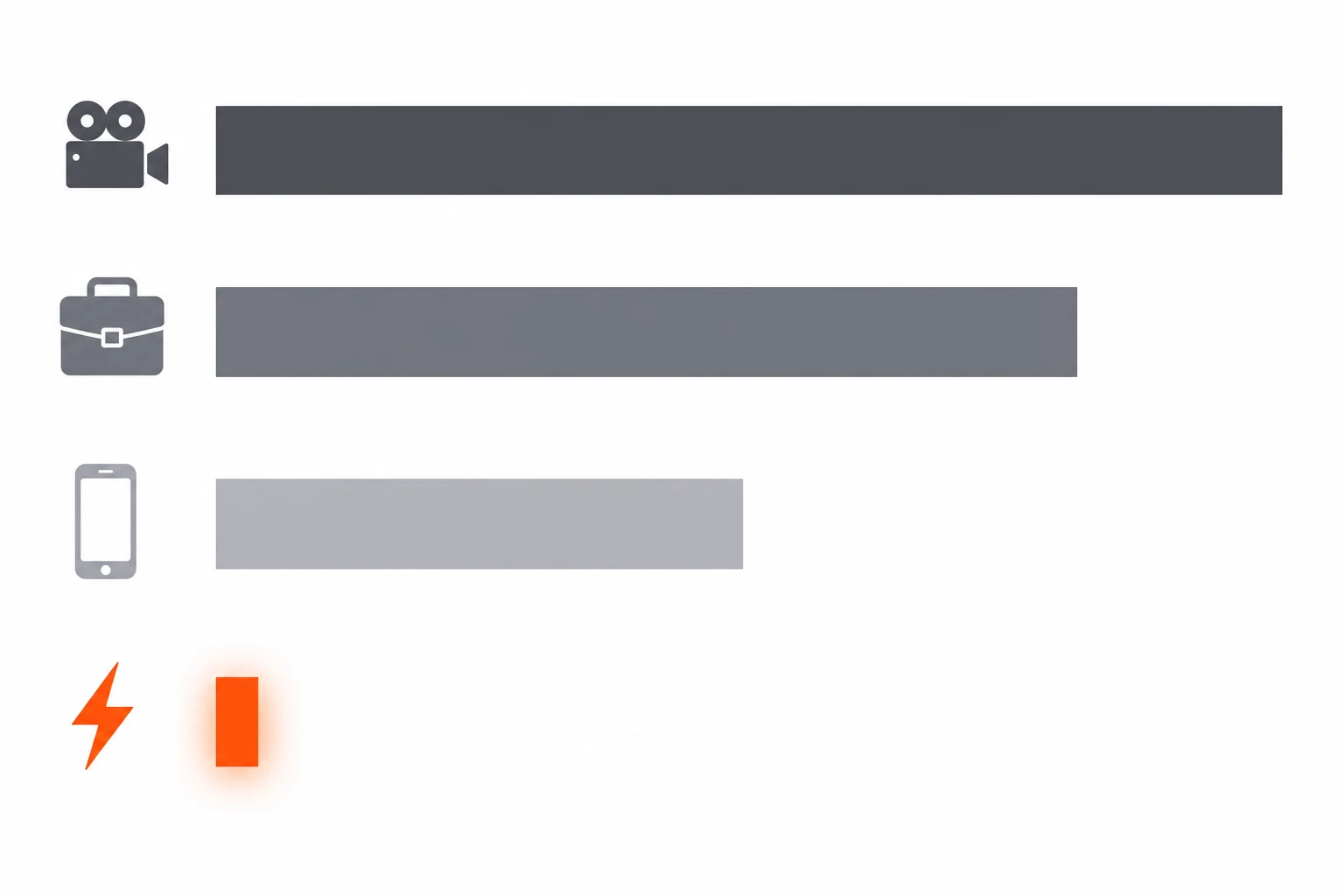
The AI line is conservative — actual cost depends on the tools you use and resolution. The cost difference is so large that the bottleneck moves from can we afford to test? to can our team write 8 distinct hooks?. That is a much better problem to have.
The five-minute walkthrough
The actual end-to-end flow on Prizmad:
- Paste the Shopify product URL into
/new. The parser reads product title, price, images, variant info, and the review block. - Select template — Quick Pitch, Product Showcase, Hook-first, Spotlight. Each maps to a different ad structure (see anatomy section above).
- Pick avatar + voice — recommended pair is auto-selected from your niche. Manual override stays sticky across other avatar changes.
- Edit hook line (optional) — auto-generated copy is usually close, but the first 8–12 words deserve human review.
- Generate. Pipeline renders TTS → avatar with lip-sync → product video → composited mp4 with subtitles + music in about 5 minutes.
- Download or remix. If a single asset misses (wrong hook, off voiceover, music too loud), regenerate just that asset — not the whole video — for a fraction of a full re-render.
Output is an mp4 ready to drop into TikTok Ads Manager, Meta Ads Manager, YouTube Ads, or Pinterest. No re-encoding needed.
Star ratings in Meta product ads: what actually syncs
The question Shopify merchants ask most often after catalog setup is how review stars end up on their Meta ads. There are two different surfaces here, and only one of them has an automatic path.
1. Stars on your Facebook/Instagram Shop listing — syndicated. Meta's own Shops ads guidance recommends sharing product ratings and reviews in your shop to help customers discover products, and Meta accepts that content from third-party review platforms rather than from your storefront theme. The review platform does the plumbing: Okendo documents a Meta integration that sends ratings and reviews to Facebook and Instagram daily, where Meta matches them to your products using catalog identifiers (product name, product URL, GTIN) and posts the matched reviews on the relevant product listings. Four constraints to plan around before you count on it: only US review content is syndicated, the reviews display only to shoppers on mobile devices, the integration sits on higher-tier plans (Okendo's is a Growth-and-above feature), and you need an active Facebook/Instagram Shop plus a GTIN or product URL in your catalog. Meta is also deprecating its own checkout in favour of merchant-managed third-party checkouts — per Okendo's documentation this does not affect syndication.
2. Stars inside the ad creative itself — an asset you supply. If the rating needs to appear on the product ad image or video rather than on the shop listing, there is no documented Meta feature that pulls it there from your reviews. The badge is part of the creative file: you export the rating from your review app and composite it into the asset you upload. Judge.me, for example, exposes average rating and review count as Shopify metafields you can render into any template, and Loox documents its own Meta Shops integration for review content. Two rules follow. Keep the number real and current — a 4.9 badge on a product that now averages 4.6 is a claims problem, not a design problem. And never let an image or video generator invent the badge: a model that cannot read your review data will still happily draw plausible-looking stars, which is the fastest route to shipping a fabricated claim inside a paid ad.
When to revisit your creative strategy
If you are running fewer than 3 creatives per week, your creative refresh velocity is the bottleneck — not your targeting. Switching to an AI pipeline turns that from a budget question into a script-writing question.
If you are running more than 10 creatives per week and your CPM is flat or rising, you have hit creative fatigue. The fix is not more volume — it is more variation. Use AI to test 5 hook patterns × 2 product angles × 2 voiceover tones the same week, then double down on the winner.
Frequently asked questions
What is Prizmad?
Prizmad is an AI ad agent for ecommerce brands. Paste a product link or describe your product in a chat, and the agent — trained on 60M+ ad creatives — writes the hooks and script, casts an AI actor and voice, and delivers ready-to-post video ads for TikTok, Reels and Shorts in about 5 minutes.
What are AI UGC ads?
AI UGC ads (AI-generated user-generated content ads) are video advertisements that use AI avatars, synthetic voiceovers, and automated editing to replicate the authentic, creator-style content traditionally filmed by real influencers or users. Prizmad generates AI UGC video ads from any product URL in minutes — at a fraction of the cost of hiring human UGC creators.
How long does it take to generate a video?
Most videos are ready within 5 minutes. Complex ads with custom avatars may take up to 10 minutes. You'll receive a notification when your video is ready.
Do I need video editing experience?
Not at all. You just chat: paste a product link, say what you want, and the agent handles the script, actor, voice and editing. Want a change? Ask in plain words.
Do I need a product link to get started?
No. A link is the fastest start — paste a page from Shopify, Amazon, Etsy or any store and the agent reads it. Or just describe your product in the chat.
Can I edit the AI-generated script?
Yes. The agent shows you the hooks and script before anything renders — edit any line yourself or ask it to ("make the hook punchier", "shorter CTA").
What platforms can I publish to?
Export videos ready for TikTok, Instagram Reels, Facebook Ads, YouTube Shorts, Shopify, and Amazon. All standard formats are included: 9:16 (vertical), 1:1 (square feed), and 16:9 (landscape) — all in Full HD 1080p.
How does AI UGC compare to hiring human UGC creators?
Traditional UGC creators charge $500–$2,000 per video and take 1–3 weeks to deliver. AI UGC ads from Prizmad cost approximately $7–13 per video (depending on your plan), generate in about 5 minutes, and can be produced in unlimited variations for A/B testing — in 15 languages from a single product link.
Do I own commercial rights to my AI-generated ads?
Yes. You own full commercial rights to every video ad you generate with Prizmad. Use them on any advertising platform, in any market, for as long as you want — no additional licensing fees.
Is it legal to run AI-generated video ads on TikTok, Meta, and Google?
Yes. AI-generated video ads are permitted on major ad platforms including Meta (Facebook and Instagram), TikTok, Google, and YouTube, provided they comply with each platform's advertising policies and any applicable AI-content disclosure requirements. You own full commercial rights to every video ad generated with Prizmad and can run them on any advertising platform without additional licensing fees.
How do tokens work?
Chatting with the agent is free — tokens are spent only on what it generates, like videos, images and voiceovers. A finished video ad with an AI avatar costs around 1,000 tokens; simpler videos cost far less. Launch includes 3,000 tokens, Starter 8,000 and Pro 35,000. Plan tokens refresh each billing cycle; top-up tokens never expire.
Can I cancel my subscription?
Yes, you can cancel anytime from your account settings. You'll keep access until the end of your billing period. No questions asked.
Ready to ship one this afternoon? Paste your Shopify product URL into the Prizmad generator and have a TikTok-/Meta-/YouTube-ready 9:16 mp4 in five minutes.