
Meta Ads Creative Testing with AI — The 2026 Playbook for High-CTR Performance
Why Meta Ads success is a creative-testing volume game, and how AI removes the production bottleneck that keeps most DTC brands stuck at 3 creatives per month instead of 30.
On this page
Meta Ads — Facebook and Instagram — is the highest-volume paid channel for most DTC brands, and it is fundamentally a creative-testing game. The targeting layer commoditized in 2022 when Apple's App Tracking Transparency gutted lookalike accuracy across iOS. Auction dynamics commoditized as bid floors converged. What still moves CTR, CPM, and ROAS is the creative itself — specifically, the first 1.5 seconds, the hook line, and the variation count. Meta's own Marketing Science research has consistently shown creative is the largest single driver of campaign performance lift.
The brands that compound returns on Meta are not the ones with the best creative. They are the ones running the most tested creative. This playbook walks through the math, the hook frameworks, the production cost wall that keeps most brands stuck, and the AI-driven workflow that lets a single performance marketer ship 30 creative variations per week instead of three.
TL;DR
- Average DTC brand should run roughly 20–40 unique creatives per month on Meta. Most run three. Cadence guidance from agencies like Common Thread Collective and creative-testing platforms like Motion tracks closely with this range.
- Marketers predict the CTR-winning creative correctly roughly one in six times, based on industry surveys from Foreplay and other creative-testing platforms.
- The bottleneck is production cost, not strategy. UGC creator marketplaces such as Insense and Billo typically price single creatives at $400–$2,000; producing 30 variations a month using human production costs $12k–$60k.
- AI-generated video creative (Prizmad pipeline) costs roughly $7–13 per finished ad and ships in five minutes.
- The unlock is not "cheaper ads". The unlock is testing volume, which is the only durable performance lever left on Meta in 2026.
Why visual prediction of CTR fails
Three patterns appear consistently in creative-testing literature from 2023–2026:
- Marketer hit rate is poor. When marketers rank a creative set in advance of testing — predicting which will win — they pick the actual top performer roughly 15–20% of the time. This is barely above random chance for a five-creative set. Reports from creative-testing platforms like Motion and Foreplay all triangulate around this figure.
- Visual quality and CTR are weakly correlated. Polished, professionally-shot creative does not reliably outperform rough UGC. In many tested cohorts the reverse is true — "low-fi" hooks beat studio-grade production by 30–80% on hook rate.
- Hook variation drives more lift than format variation. Holding everything else constant and changing only the first 1.5 seconds of a creative routinely produces 2–4x CTR spreads. The body of the ad matters far less than the opening claim.
The takeaway is uncomfortable for marketers who hold strong creative opinions: you cannot eyeball winners. The only way to find what works for your specific account, audience, and offer is to test — at volume.
The creative-testing math
Think of Meta creative testing as a portfolio with a fat right tail. A 30-creative test cycle typically produces:
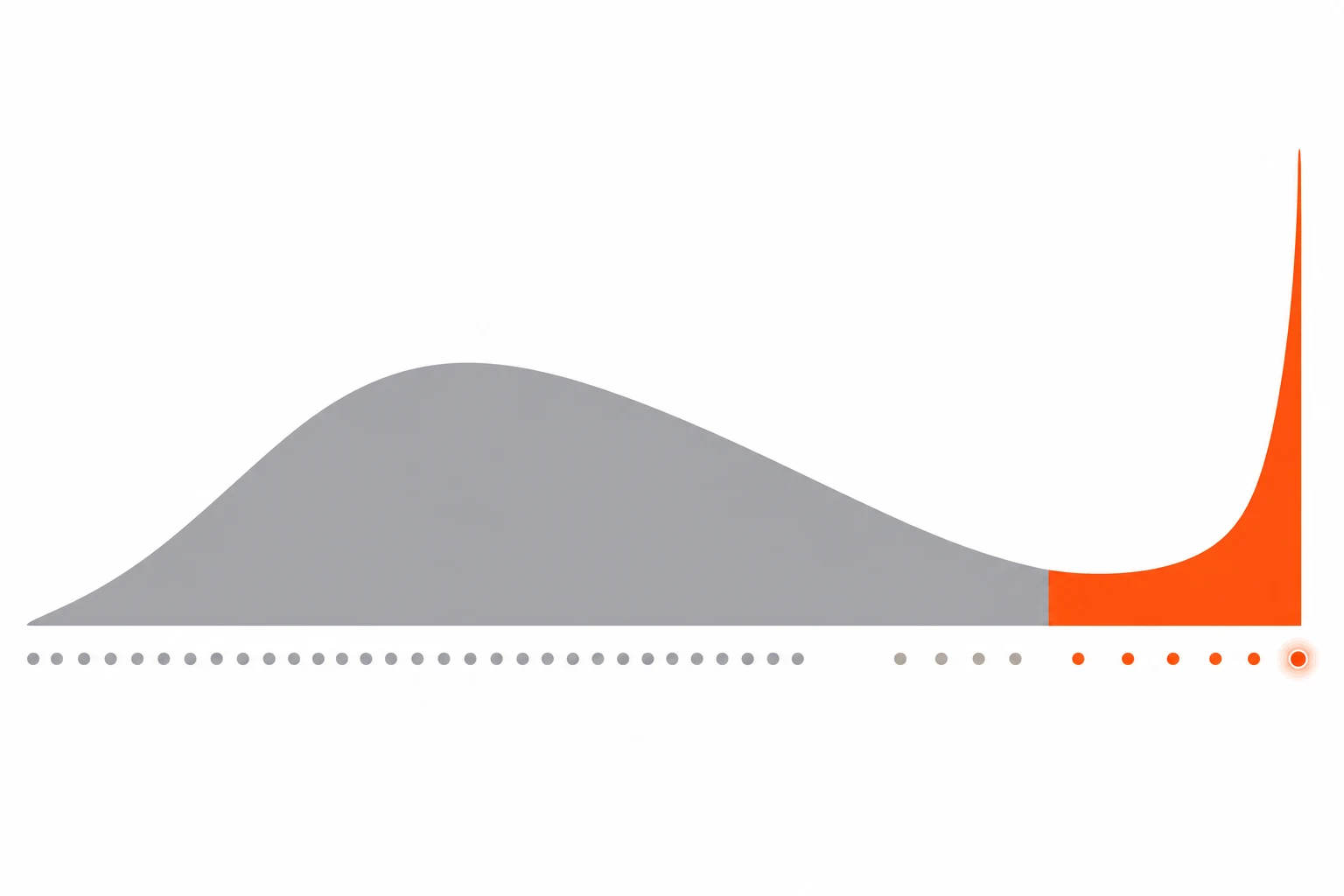
- 20–24 "losers" — creatives that perform at or below baseline CTR. Kill these within 7–14 days.
- 4–7 "average" — creatives that match baseline but do not break out. Keep for retargeting or pause for refresh.
- 2–4 "winners" — creatives that produce a meaningful CTR lift (often 50–150% above baseline) and become workhorses for 4–8 weeks.
- 0–1 "outliers" — rare creative that produces 3–5x CTR lift and runs for months. These are what define account-level ROAS.
The implication: 80% of creatives you produce will lose, and that is the correct outcome. Brands that try to make every creative a "winner" are doing creative R&D, not media buying. The role of testing is to find winners through volume — not to engineer them through opinion.
A bottom-third performer brand running three creatives per month has a 0.7-creative-per-month expected winner yield (3 × ~24% breakthrough rate). A top-decile brand running 30 creatives per month yields 6–8 winners. That spread compounds over a year into the difference between "Meta works for us" and "we cannot scale on Meta".
Hook patterns that consistently produce CTR lift
Six hook frameworks that map cleanly to AI-generated avatar-led creative. Mix and match across a test batch.
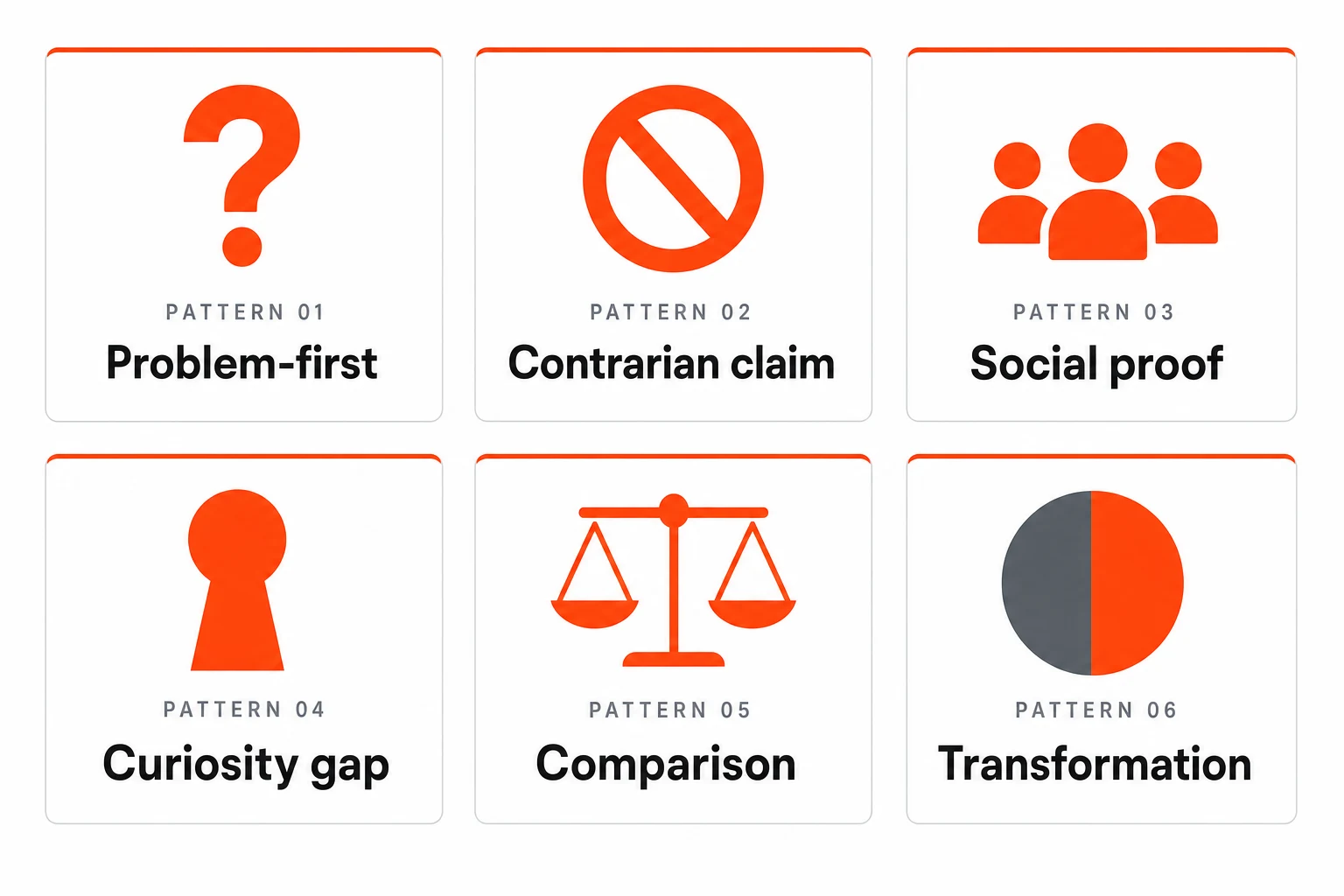
1. The problem-first hook
"Why your skin still looks tired by 3pm." The viewer self-identifies with the problem before the product appears. Works for: skincare, supplements, productivity tools, sleep aids. Hook length: 6–10 words. Avatar tone: knowing, peer-to-peer.
2. The contrarian-claim hook
"Stop wasting money on protein powder." The hook explicitly contradicts conventional wisdom or the dominant competitor's positioning. Works for: consumer goods, services, software. Hook length: 5–8 words. Avatar tone: confident, slightly confrontational.
3. The social-proof hook
"50,000 women switched to this in the last 90 days." Specificity matters — generic "thousands of customers" underperforms specific numbers and recent timeframes. Works for: established brands, post-launch products. Hook length: 8–12 words. Avatar tone: matter-of-fact.
4. The curiosity-gap hook
"I tried this for 30 days and the result was not what I expected." The viewer keeps watching for the reveal. Works for: outcome-driven products (fitness, beauty, learning). Hook length: 10–14 words. Avatar tone: personal, story-coded.
5. The comparison hook
"Why I stopped buying [generic category] and switched to this." Maps the new product against an old habit, not against a competitor by name. Works for: replacement products, category-disrupting launches. Hook length: 8–12 words.
6. The transformation-reveal hook
Visual-led, often skipping the avatar entirely. Show the before-state and the after-state in the first 1.5 seconds. Works for: home goods, cosmetics, apparel, fitness. Use Seedance 2.0 or Kling Motion Control 3 for the visual hook, with optional voiceover overlay.
A 30-creative test month typically uses each of these hook patterns 4–6 times across different products, voice tones, and visual treatments. The matrix is 6 hook patterns × 3 voice tones × 2 product angles = 36 unique creatives — generated, rendered, and queued in roughly a day on the AI pipeline.
The production cost wall
This is the part most brands underestimate. Running 30 creatives per month through traditional production:
| Production channel | Cost per creative | Turnaround | 30-creative month |
|---|---|---|---|
| UGC creator (mid-tier) | $400–$800 | 7–14 days | $12k–$24k |
| Agency-managed UGC | $1,000–$2,500 | 4–6 weeks | $30k–$75k |
| In-house studio | $1,500–$5,000 | 2–4 weeks | $45k–$150k |
| Freelance editor + stock footage | $150–$400 | 3–5 days | $4.5k–$12k |
| AI pipeline (Prizmad) | ≈$7–13 in tokens per finished ad | under 10 min | ≈$215–390 |
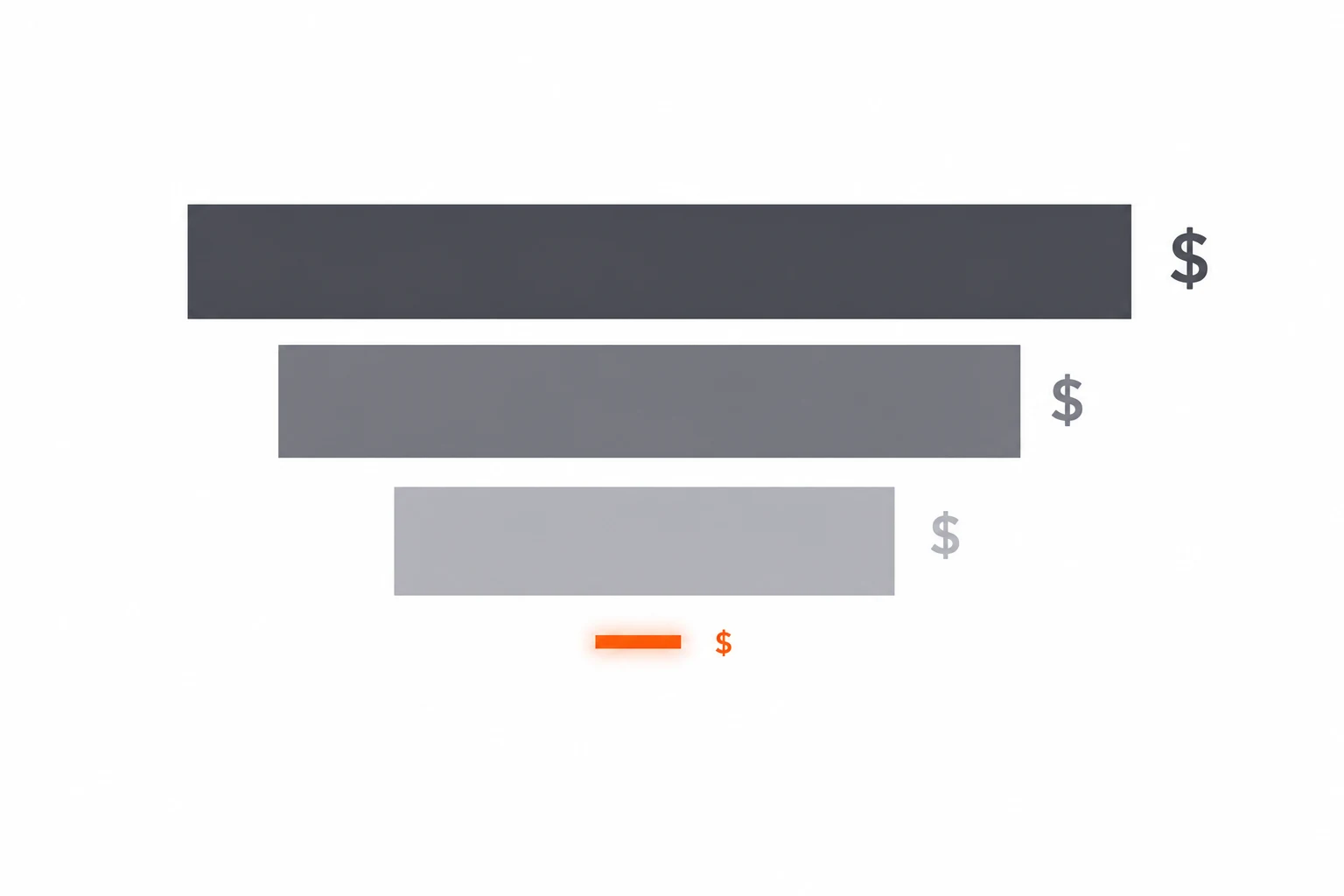
For a brand spending $50k–$200k/month on Meta, allocating $30k+/month to creative production is structurally infeasible — that is 15–60% of total budget going to production, not to media. Most brands cap creative production at 10–15% of total spend, which forces them to run far fewer creatives than the testing math demands.
The AI pipeline collapses production cost by two orders of magnitude. That changes what is possible: a brand spending $50k/month on Meta can run 60 creatives a month instead of three, with the same total budget, and reallocate the saved creative budget into media spend.
Hook rate, CTR, and the metrics that matter
Meta creative performance is measured at four levels, in order of leading-indicator strength:
- Hook rate (3-second video plays / impressions) — the most predictive metric. A hook below 25% is usually a kill, regardless of downstream conversion. A hook above 40% buys the creative more runway. Hook rate is determined almost entirely by the first 1.5 seconds.
- Thumb-stop rate (proprietary, often 6-second engagement) — measures whether viewers commit past the initial hook. Above 12% is strong; below 7% is weak.
- CTR (link clicks / impressions) — downstream of hook rate. Baseline varies by category; 1.5–3% is typical for DTC. Anything above 4% is exceptional.
- Cost per add-to-cart and cost per purchase — the eventual ROAS gate, but these are noisy and shouldn't be the primary creative-killing signal in the first 7 days.
The right way to manage a 30-creative test month: kill creatives below 25% hook rate at 1,000 impressions. Promote creatives above 35% hook rate to higher daily budget. Track CTR and CPA on the survivors. Most decisions happen at the hook-rate stage, not the conversion stage — which is why hook quality and hook variation matter so much more than visual polish.
When and how to kill creatives
Three rules of thumb that prevent both premature killing and creative fatigue:
- Kill rule: if hook rate is below 25% after 1,000 impressions OR CTR is below baseline-minus-30% after 5,000 impressions, kill. Do not pause; archive and move on. Holding "decent" losers in active testing drains learning bandwidth.
- Scale rule: if hook rate is above 35% and CPA is below CAC target after 3 days, raise daily budget by 30–50%. Hold for another 3 days, then raise again. Do not double overnight.
- Fatigue rule: when frequency exceeds 2.5 in a 7-day window on a single creative, expect CTR decay within 5–10 days. Refresh the creative — change the hook, keep the body — and re-enter testing.
The fatigue rule is the silent killer. Brands with strong winners tend to ride them until performance collapses, then scramble for replacements. The AI pipeline lets you stage replacements proactively — generate 5 fatigue-refresh variants of each winning creative monthly, queue them, and rotate before the metrics tell you to.
A hypothetical brand: from 3 creatives to 30
Take a DTC supplement brand spending $80k/month on Meta. Before AI creative production:
- Creative output: 3 new creatives per month, all professionally produced
- Production cost: $4,500/month (~6% of spend)
- Winner yield: roughly 0.7 winners/month
- CTR baseline: 1.8%
- CAC: $52
- Account dynamics: every 6–8 weeks, the current winners fatigue and the brand panics. Two weeks of bad performance while new creatives are produced. Net 10 weeks/quarter of stable scaling, 3 weeks of decline.
After switching to an AI creative pipeline:
- Creative output: 30 new creatives per month across 6 hook patterns
- Production cost: ≈$215/month in tokens (under 0.3% of spend)
- Winner yield: 5–7 winners per month
- CTR baseline: 2.6% (winners are stronger because the pool to draw from is 10x larger)
- CAC: $34 (–35%)
- Account dynamics: rolling refresh; no panic cycles. Lost media-buying weeks per quarter drop to under one.
These numbers are illustrative, not from a real account. The directional shape is consistent with what creative-testing teams report after moving from low-volume production to AI-enabled high-volume testing.
The 30-creative workflow in a single day
How the AI pipeline produces a full month of Meta creative variations in roughly six hours of focused work.
- Strategy block (30 min). Define the test matrix: 6 hook patterns × 3 voice tones × 2 product angles = 36 candidates. Pick 30 to ship.
- Hook writing (90 min). Write 30 distinct opening lines, 6–14 words each, mapped to the hook framework. Or auto-generate from product URL and edit the best 30.
- Generation (3 hours, mostly waiting). Feed each hook + variation into the Prizmad pipeline. Each render takes ~5 minutes; batched in parallel, 30 creatives complete in 90–120 minutes of wall time. Use the active-generation dashboard to monitor.
- Spot-check and queue (60 min). Review each rendered creative for obvious failures (mispronunciations, wrong cuts, music-volume issues). Regenerate single failed assets without re-rendering the whole video (a fraction of a full render).
- Upload to Meta (60 min). Group into 3–5 ad sets by hook pattern. Set daily budgets. Launch staggered over 24 hours to avoid initial-impression spikes.
Total: about one focused work day. Compare to the multi-week production cycle that human UGC and agency routes require.
Disclosure, compliance, and platform-policy notes
Three things that get accounts flagged or restricted:
- AI disclosure labels. Meta's current policy on AI-generated content requires creators to label AI-generated content depicting realistic-looking people or scenes. This is a creative-side toggle in the upload flow. Apply it; non-application can result in reduced reach or account restriction. The US FTC endorsement guides also cover misleading AI testimonial scenarios.
- Avatar likeness. Do not generate avatars that resemble identifiable real people, including customers, founders, or competitor staff. This is both a Meta policy issue and a right-of-publicity issue in most US states and EU member states. The IAPP tracks the rapidly evolving legal landscape for AI likeness, deepfakes, and right of publicity.
- Category compliance. Meta's Advertising Standards do not change because the video is AI-made. Health claims, financial claims, "before and after" imagery in restricted categories, and prohibited products are all evaluated identically. Run AI-generated scripts through the same review process you would use for a human-shot ad.
Frequently asked questions
What is Prizmad?
Prizmad is an AI ad agent for ecommerce brands. Paste a product link or describe your product in a chat, and the agent — trained on 60M+ ad creatives — writes the hooks and script, casts an AI actor and voice, and delivers ready-to-post video ads for TikTok, Reels and Shorts in about 5 minutes.
What are AI UGC ads?
AI UGC ads (AI-generated user-generated content ads) are video advertisements that use AI avatars, synthetic voiceovers, and automated editing to replicate the authentic, creator-style content traditionally filmed by real influencers or users. Prizmad generates AI UGC video ads from any product URL in minutes — at a fraction of the cost of hiring human UGC creators.
How long does it take to generate a video?
Most videos are ready within 5 minutes. Complex ads with custom avatars may take up to 10 minutes. You'll receive a notification when your video is ready.
Do I need video editing experience?
Not at all. You just chat: paste a product link, say what you want, and the agent handles the script, actor, voice and editing. Want a change? Ask in plain words.
Do I need a product link to get started?
No. A link is the fastest start — paste a page from Shopify, Amazon, Etsy or any store and the agent reads it. Or just describe your product in the chat.
Can I edit the AI-generated script?
Yes. The agent shows you the hooks and script before anything renders — edit any line yourself or ask it to ("make the hook punchier", "shorter CTA").
What platforms can I publish to?
Export videos ready for TikTok, Instagram Reels, Facebook Ads, YouTube Shorts, Shopify, and Amazon. All standard formats are included: 9:16 (vertical), 1:1 (square feed), and 16:9 (landscape) — all in Full HD 1080p.
How does AI UGC compare to hiring human UGC creators?
Traditional UGC creators charge $500–$2,000 per video and take 1–3 weeks to deliver. AI UGC ads from Prizmad cost approximately $7–13 per video (depending on your plan), generate in about 5 minutes, and can be produced in unlimited variations for A/B testing — in 15 languages from a single product link.
Do I own commercial rights to my AI-generated ads?
Yes. You own full commercial rights to every video ad you generate with Prizmad. Use them on any advertising platform, in any market, for as long as you want — no additional licensing fees.
Is it legal to run AI-generated video ads on TikTok, Meta, and Google?
Yes. AI-generated video ads are permitted on major ad platforms including Meta (Facebook and Instagram), TikTok, Google, and YouTube, provided they comply with each platform's advertising policies and any applicable AI-content disclosure requirements. You own full commercial rights to every video ad generated with Prizmad and can run them on any advertising platform without additional licensing fees.
How do tokens work?
Chatting with the agent is free — tokens are spent only on what it generates, like videos, images and voiceovers. A finished video ad with an AI avatar costs around 1,000 tokens; simpler videos cost far less. Launch includes 3,000 tokens, Starter 8,000 and Pro 35,000. Plan tokens refresh each billing cycle; top-up tokens never expire.
Can I cancel my subscription?
Yes, you can cancel anytime from your account settings. You'll keep access until the end of your billing period. No questions asked.
Ready to start testing at volume? Paste your product URL into the Prizmad generator — produce your first 5-creative test batch this afternoon, launch tomorrow. Pair it with the Shopify DTC pillar for niche-specific hook patterns, or the Amazon playbook for marketplace creative.