
Luma and Dumbstruck Just Launched 'Creative Intelligence' for Ads. Here's What It Means.
Luma and Dumbstruck announced a partnership on August 13 to combine AI video editing with emotion analytics — a closed loop for optimizing ad creative before media dollars are spent.
On this page
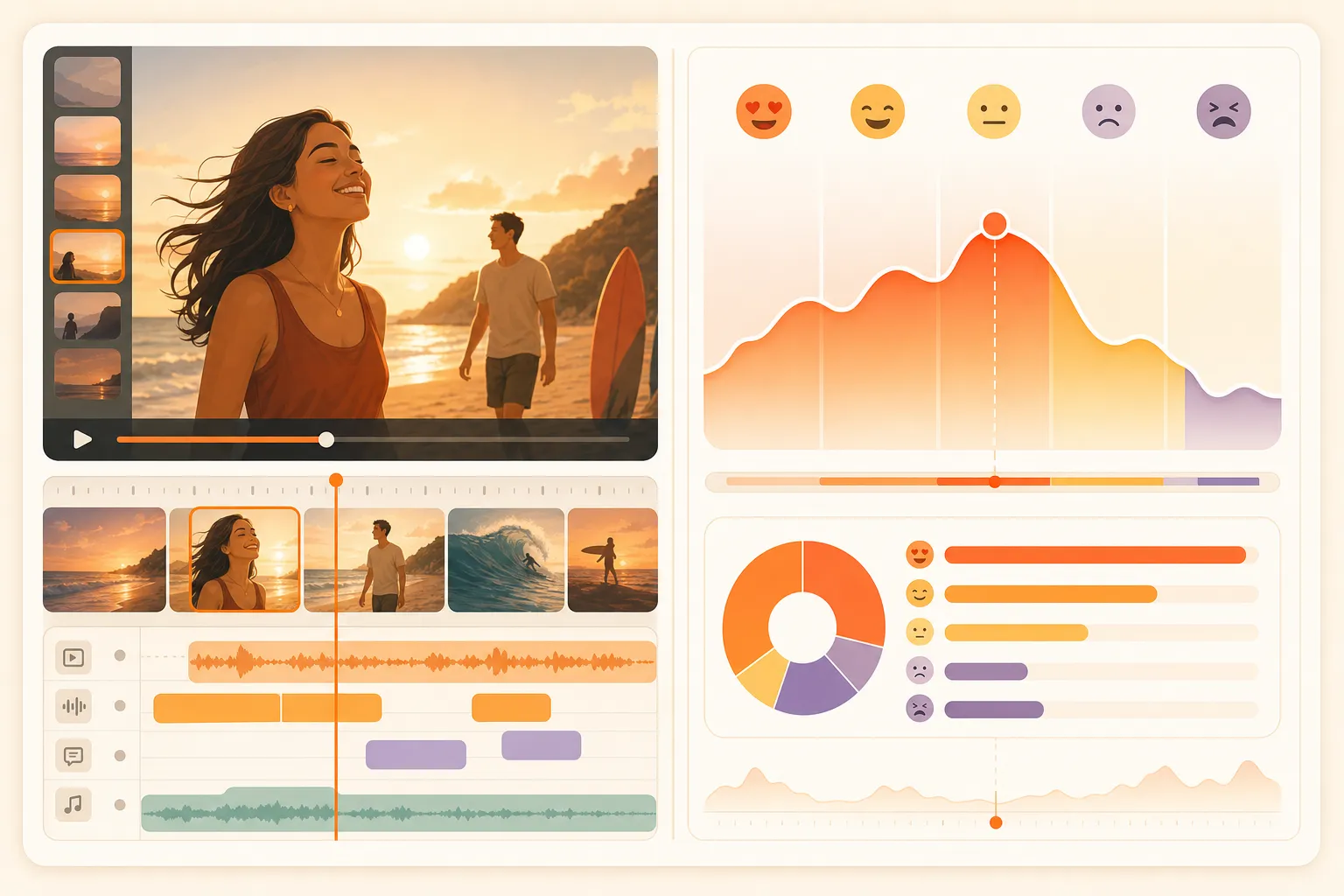
On August 13, Luma and Dumbstruck announced a partnership to build what they call "Creative Intelligence" — a new category that pairs Dumbstruck's emotion analytics (AI-powered facial coding that measures how people respond to video ads before launch) with Luma Agents' frame-by-frame AI video editing. The pitch: instead of generating more creative and hoping, advertisers can now test an ad against real audience response, get AI to execute the specific changes that move the needle, and validate the result before a single media dollar is spent.
This matters even if you never touch either tool, because it names the real bottleneck in 2026 ad creative — and it's not production anymore.
The problem they're solving is real
The core insight in the announcement is worth sitting with: AI has made ad production virtually limitless, so the constraint has moved. It's no longer "how many ads can we afford to make" — it's "which of these ads should exist at all." Luma's COO Caroline Ingeborn put it as: "Human creativity is not the bottleneck here — uncertainty is."
That's the same shift we've been tracking from the creative-production side. When tools like Prizmad, Creatify, or Arcads can turn a product URL or script into a finished UGC-style ad in minutes, the economics flip: the scarce resource becomes knowing which variant will win, not being able to render another one.
What Luma and Dumbstruck are adding is the measurement loop on top of that abundance: Dumbstruck identifies where content underperforms emotionally, Luma Agents execute the edits, Dumbstruck validates the result before launch. Closed loop, no reshoot, no agency feedback cycle.
What's actually new here (and what isn't)
The components aren't new. Emotion/attention measurement for ads has existed for years — Dumbstruck itself has powered award-winning Super Bowl campaigns. AI video editing with granular control is also not new; every serious video platform has been adding frame-level tools. What's new is the integration: a productized closed loop where measurement feeds directly into AI execution and back, marketed as a category rather than two point tools.
The honest caveat for performance marketers: the announcement leans on a flagship consumer brand (Wayfair) exploring the tech, not on published performance data. "Brands are exploring" is a softer claim than "brands saw a 20% lift in CTR." Treat it as an interesting architectural direction, not yet a proven playbook with numbers you can copy.
Why ecommerce advertisers should care
Three reasons this signal matters for DTC and ecommerce advertisers specifically:
-
It validates the "variants over polish" strategy. The whole premise — AI produces abundance, measurement decides what deserves to exist — only works if you can actually generate many creative variants cheaply. That's the production reality AI UGC tools created. If the industry's next layer is measurement-on-top, the advertisers who already ship volume have a head start; the ones still hand-producing one or two polished spots per quarter don't.
-
It points to where ad creative testing is heading. Today most teams test in-market: spend real media budget, let the platform's algorithm find winners. The Luma/Dumbstruck direction is pre-market validation — measure response before launch. Even if their specific product doesn't become the standard, the direction (AI + attention/emotion signals + fast iteration) is where creative testing is going.
-
It's another sign the creative pipeline is compressing end-to-end. First, production compressed (URL → ad in minutes). Now measurement is starting to compress (response data → AI edit → validated ad). When both halves are fast, the constraint moves to your internal process: how quickly can you interpret signals and ship the next variant?
What to actually do with this now
Don't buy anything yet — this is a partnership announcement, not a self-serve tool with pricing. But there are two cheap actions worth taking today:
- Run your own pre-launch validation loop with free tools. You don't need emotion analytics to start testing hooks before spending media budget. Show 5-10 ad variants to a panel (friends, a Facebook group, a cheap user-testing platform) and ask one question: "would you scroll past this?" The discipline matters more than the measurement tech.
- Make sure your creative loop is fast enough to act on signals. The whole value of measurement collapses if you can't produce the next variant in hours instead of weeks. A tool like Prizmad that turns a product URL into a finished ad in about 5 minutes exists for exactly this: signal arrives → new variant ships same day.
What to watch next
- Whether they publish performance numbers. A case study with actual CTR/lift data from the Luma+Dumbstruck loop would turn this from architectural direction into a proven playbook. Until then, treat claims carefully.
- Whether the majors copy the loop. Meta and Google already have the response data and the creative tools; a native "measure then auto-iterate" flow inside an ad platform would make this category mainstream overnight.
- Whether AI-actor UGC ads plug into this. Emotion analytics on AI-generated UGC-style ads — the format most DTC brands are now scaling — is the natural next integration, and the one most relevant to the Prizmad-style workflow.
Source: Luma, "Luma and Dumbstruck Launch Creative Intelligence for Advertising," August 13, 2026.